Anyways, I also just feel really compelled to like, you know, buy this thing or whatever because this ad really "speaks" to me:
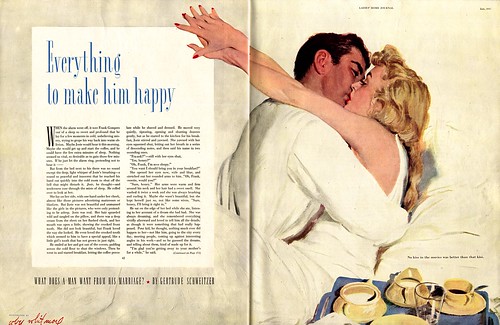
I would really like this teapot set because it will make my man happy.
Or help me find a man.
Or find ~love~.
Advertisements since the dawn of time (or since the dawn of advertisements) have preyed on both stereotypical gender roles and played-up fears to sell products to women.

Is it ethical for advertisements to portray that women need these things to make themselves attractive to men, or to keep their male partners happy?
Uhhhhhh....no.
If we evaluate these type of advertisements under the TARES framework, they would violate the respect paid towards women. These type of advertisements do not pay respect towards women as autonomous beings who function outside of the desire of males. It perpetuates the stereotype that women are second towards males in our culture, and can aggravate advertisements and attitudes like this:

Advertisements that place women in sexually or physically overpowered situations can perpetuate that these things are okay and are accepted in our culture, when they totally aren't.
When scenes like this are present in everyday culture, it trivializes the harshness of things such as rape and sexual violence towards women. Media, advertising companies and corporations have social responsibility that the advertisements used on their behalf do not endorse, normalize or trivialize serious matters.

Hey Karina! I really liked your post, and I definitely agree with what you've said. As a guy, I hate this type of advertising. I don't think that women should ever have to do anything to themselves or buy a product to be attractive. I especially don't like the unrealistic (and highly enhanced/photoshopped) images of women that are used in these ads. It creates a ridiculous standard of beauty that doesn't exist in reality, and can contribute to the viewers of these ads having body-image issues.
ReplyDeleteIn addition to my own personal views, I think that this type of advertising is unethical from a communitarian perspective because of the effects you discussed in your post. While these ads may help to sell the product that they advertise, the harmful effects they have on our society definitely outweigh any potential economic benefits. Objectifying women, creating unrealistic standards of beauty, and trivializing sexual assault are all detrimental to our society and are not worth selling a few more tubes of lipstick, tea pot sets, or designer clothes.
Along the same lines, this kind of advertising seems unethical from a utilitarian perspective. The greatest good for the greatest number in this situation, would be to NOT run the ads that portray women as mindless creatures whose sole function is to satisfy the sexual desires of men. The consequences of running ads like these are mostly negative and only benefit those who make the products that are being advertised.
Also, your blog looks really cool.